
How Nostalgia Plays A Part In The Technology We Use

Is Virtual Reality The New Way To Advertise?

How Online Platforms Are Fighting Against Misinformation
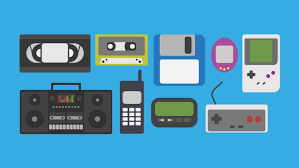
Recent news and images of Motorola’s foldable smartphone, mimicking designs of flip phones from the late 90s and early 2000s, has some consumers asking “why?” while others seem to be keen on falling down the rabbit hole of nostalgia. The satisfaction of snapping a phone shut seems to still be a coveted experience, almost impossible now with the popular design of current smartphones, and has encouraged telecommunications companies to bring back designs that feel almost antiquated now.
So, what does our nostalgia mean for the future of technology? Are we moving backward or forward? And is there really even a purpose for the innovation other than to satisfy the itch to experiencing a simpler time as we close out this decade? It’s hard to say what it is exactly that has driven this desire for the re-immergence of flip phones, but it is an interested display of the effects of nostalgia on the way we want to experience evolving technology and services. Most digital platforms seem to mimic their physical counterparts as a way to illustrate familiarity to users, such as with folder structures on cloud storage platforms, like electronic data rooms. Interfaces are designed to be as simple to use as physical documents and files, but with all the added benefits of specialized software. So, while users are adapting to a paperless world with much more collaboration and the ability to work remotely, there is still a connection with the past and recognition of what it was that made these tools or practices useful to begin with.
While the entirety of the smartphone design hasn’t yet been confirmed by Motorola, the foldable screen (arguably its main selling point) seems to be definite. It will be interesting to see if the Motorola flip phone takes off again as it once did with the Razr and to question what innovation really means if all we really want is to revert to the designs and experiences of the past.